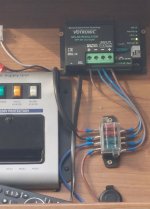
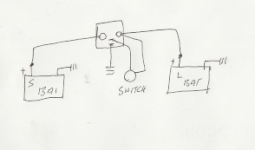
Yes I'd read that recently Trev but I was asking about a run of the mill MPPT controller that only has 3+ & 3- ports, yonks ago on facts it was always a question that never got properly answered when anyone asked what the load terminals were there for, if charging the VB was a viable option why did so many have a flat VB
Be hard to give a definitive answer as different controllers will be wired internally in different ways.
But there are some real potential gotchas if you were to connect a normal LOAD output on a solar controller to a vehicle battery ...
The LOAD purpose is meant to be an output only. If you connected a Starter Battery to it, then you are providing a power source into the LOAD. Will that matter? well, I would think it would depend on how the controller is designed. It may, or it may not. Who knows for the specific controller fitted.
When starting, it might try and draw a highish current through the load terminal (in a similar way as drawing current through a bi-directional split-charge relay). Depending on how the controller is designed, it might blow a fuse, it might damage the circuit, or it might just cut out to save itself (the Victron MPPT Load circuit for example is current limited and it will disconnect when over-current to protect itself).
Putting a fuse on the Cable going to the Vehicle Battery may or may not be good enough to protect the electronics of the Controller (depends on the type of fuse and the electronics).
I would not recommend anyone do this without knowing more about how their load circuit works, and it is unlikely they will be able to find out without a destructive test.
Now I HAVE used the LOAD output to drive a charge to the Vehicle Battery - but this was purely to take advantage of the remote control of the LOAD output via the Victron App and I actually used an Ablemail AMT12 between the Controller and the Leisure Battery which took control of the current passing through the it.
But a direct connection? I wouldn't!



 ) The panel was about £20 then a lead to plug into OBD was another £15. Seems to work fine with the panel propped inside the windscreen.