Some electrics advice please.

motoroamer

Full Member

Messages
36
Can I get some advice or ideas please.

I have a Campervan converted by Autosleepers in 2007. It is a Ford Transit Mk7 2.4 which Ford supplied with 2 batteries already installed. As such both batteries are used together for starting and connected in series when the engine is started/running. When the ignition is off a bi-stable relay disconnects the two batteries from each other. I'll refer to this second battery as Auxiliary. It was said this design was to ensure the engine would always start regardless of the discharged state of the auxiliary battery. Good for use by folk using the vehicle for hydraulic equipment repairs, tyre fitters etc on the road.

Autosleepers used this second Auxiliary battery as a leisure battery rather than installing another.

I wanted more leisure power availability than this 100 AH so installed another battery and parallel connected this one to the other effectively creating 2 times Auxiliary batteries for Leisure type of use, 200AH in all. I also fitted 120W of solar to charge these two batteries as I tend not to drive regularly when camping. I used a Morningstar Sunsaver MPPT Controller. It all seemed to work ok for a while, though the amount of useable power (percentage) from EFB batteries was always restrictive. The Auxiliary batteries now need to be replaced are as they don't hold a charge anymore.

Now I'm wondering whether to 'push the boat out' and separate the systems and have the Ford set as it was originally by Ford and have a completely separate set up for the Leisure side using a Lithium battery of about 150AH which would fit under the passenger seat and use a Victron B to B charger between something like a Eco tree Lithium 150AH and the Yuasa EFB starter battery. Also get a new Victron Solar Controller for the Lithium battery.

Would this work and would it be advantageous for me ?
I don't have any idea which lithium battery to get neither B to B or Solar Controller but would guess at......

Eco tree lithium life po4 150 AH with heater and Bluetooth.

Victron Orion XS 50A B to B charger

Victron smart solar charge controller mppt 100/50 (I may add panel/s)

Would these all work well together and be appropriate ?

Any ideas, comments or suggestions very much appreciated.
 
not answering the tech part of your question but fogstar do a 230A battery specifically designed to go under the seat terminals on side etc almost £600 but site. discount improves that
 
Thanks Ken, I think I have seen that one but but having measured up I reckon it's too big dimensionally to go in easily. Thanks for reading my blurb 👌👍
 
Did you mean that they are connected in parallel rather than in series?

If so, what you are describing is in effect a split charge system, as fitted to many motorhomes and campervans. And, up to a point, it works. Yes, you could add more batteries in parallel.

The point comes when the leisure bank is a lot bigger than the engine battery, but the alternator is only set up to recharge the starter battery.

It really is a good idea to move away from split charge and instead fit a battery to battery charger.

Yes, they are expensive, but they work much better and (unless you buy a Sterling) they last forever, and make your batteries last far longer.
 
Last edited:
Thank you Geek. Yes ! I'm sorry they are connected in parallel and connected and disconnected by way of the bi- stable relay fitted by Ford. NOT in series as you said.

I'm assuming the alternator is set up to charge up to 200AH of batteries as that's what Ford had with the original 2.
Am I correct in thinking if I went for the new 150AH Lithium battery and a Victron 50A B to B charger that the alternator would be ok and charge the Lithium when the other 2 are fully charged ?
 
The alternator isn't set up to charge a specific size of battery. It will just go by voltage.
Because you have two lots of batteries with different states of charge, it is never possible to properly recharge them by just joining them together.

Adding a new lithium battery, charged by a B2B charger, would work, but it wouldn't play nicely with the existing setup.

Your existing habitation battery is connected to the habitation wiring.

Adding a lithium battery also connected to the existing habitation wiring, will effectively join them together.

When you add a B2B charger, you need to disable the split charge system.

So you have three options:

1. Replace the existing habitation battery with one or more lithium batteries, and replace the split charge with a B2B.
2. Add a lithium battery in parallel with your existing habitation battery, and replace the split charger with a B2B.
3. Leave it as it is (after replacing the dead batteries) and be more frugal with the 12v power you use. After all, when it was new, people used light bulbs. LED lighting has dramatically reduced power needs.

Personally, what I do is 2.
 
Thanks again Geek.

I'm afraid I'm getting quite confused I guess because I am not aware where there is and what exactly is a split charge system. The second battery as originally fitted by Ford is well tied up with the whole of the vans electrics and is used for power hungry things like heated windscreens front and rear when the engine is running.
I'm thinking my idea is like your number 2 but I was unaware that having a B to B would not be kind to the original Ford setup.
I was expecting to disconnect the habitation wiring from the Ford set up and put it all back to how Ford built it. Then install a new Lithium Battery (not in parallel) separately and connect the habitation wiring to that new separate battery. Then I was hoping that an isolated B to B charger connected between the new Lithium and the original Ford batteries would do the job. Also have the solar just charging the new Lithium battery. I'm thinking maybe my understanding of the isolated B to B is not correct and also I'm not at all aware of an existing split charger. I don't have Ford drawings to even try to understand it.
I'm very grateful for your time and advice. Though I've done all the work myself previously and am a capable AC electrician, I'm starting to to wonder, maybe this battery and 12v stuff is beyond me now with these complex charging systems and different battery types.
 
Ideal time to make the change. Was it me I would go Eco-Worthy Lifepo4 as big as you can fit in. B2B would either be Votronic or Victron, last time I looked Victron were cheaper but check. If you use D+ to initiate the B2B it will be isolated until engine is running
Are you sure your Morningstar solar controller won't work? If it doesn't have Lifepo4 setting does it have Gel? That is usually in the right range for a lot of Lifepo4.

EDIT: I would have it isolated from the original system except for adding the B2B
 
Thanks very much Nabsim.
Yes my old Morningstar does have a Gel setting so I'll maybe carry on with it but it is 18 years old and been running continuously. I thought it might be an idea to get a new one and likely be a little more efficient.

I'm just worried about Geek saying... ....
"Adding a new lithium battery, charged by a B2B charger, would work, but it wouldn't play nicely with the existing setup."

Therefore playing havoc with the original Ford setup.
 
You are overcomplicating this.

A split charge system simply connects the +ve pole of the starter battery to the +ve pole of the auxiliary battery, usually when the alternator turns the ignition light off.

A B2B works by having the two battery banks at separate voltages, so they mustn't be connected together.

All you need to do is to find the split charge connection and disable it. On my van, it was just a matter of removing one coil connection from a relay.

Then you fit the B2B charger in the position of the split charge relay (electrically, if not physically). Job done.
 
Thanks again Geek, I think it's more a case of not understanding rather than overcomplicating it.
I'm just struggling to imagine where the link could be when there are 3 batteries. I'll have to consult the Ford Transit Forum maybe to find where the split charge is situated.
 
It is very unlikely that Ford will have done anything different to the norm: the split charge relay field coil will be powered from the ignition live and earthed by the alternator D+ connection.
When you turn the ignition on, the alternator light comes on.

You start the engine and when the alternator powers up, that light goes off. That in turn closes the SC relay, which has its main contacts connecting the two batteries together.

You only have to disconnect any one of those four relay connections, though usually just unplugging the relay is easier.

All the habitation power will come off the aux battery, with no other connection to the vehicle wiring.
 
if you fit as a separate system if will not matter what is in there or how it connects. Run a new cable from started battery for B2B.

What you would need to decide is do you need to have 2 batteries for the van side. Not certain from what you have said if the van is designed to have 2 batteries just for the van or if the 2nd battery is something fitted for if you want/need auxiliary/habitation power. If van itself needs 2 then I would fit everything as additional and separated.
 
If you add an extra battery without connecting it to the habitation wiring, yes, you could charge it with a B2B charger.

However, you would end up with a useless, fully charged battery by doing that. No wires to take the power anywhere useful.

If you connect the habitation wiring to it so you can use the power stored in it, you are also connecting it to the existing aux batteries.

That means that the output of the split charge relay and the output of the B2B charger will be joined together as soon as you start the engine. This will not end well.
 
Thank you Geek and Nabsim, I've been studying all your kind replies and researching all the Ford info I have as well as looking at the instructions for the Victron Orion XS 50 A b to b.
I think I have confused the issue by my own information.
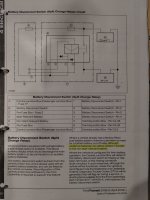
Ford delivered the van with 2 batteries connected to each other with a split charge relay. I've previously referred to this as a bi- stable relay as it is not voltage sensitive but really like a latching relay.....power on to close/power to reset.....open.
The third battery, I fitted years ago, is just parallel connected to the second Ford battery. My plan is to remove this third battery so the Ford is back to factory except the habitation electrics are connected to the second Ford battery.
At the moment all three of the batteries are Yuasa EFB type.

So reading all I can about split charge relays and the instructions for the Victron Orion XS b to b I thought I can ;

Take the Ford equipment back to factory. (2 batteries)

Use the place where I had removed the third battery to put in a new 150AH Lithium battery. (The biggest for the space available)

Install a new Victron Orion XS b to b (non isolated version as the - negative are common chassis)

Connect the Orion input to the +post of the starter battery (Ford first battery)

Connect the Orion output to the +post of the new Lithium battery.

Connect the -post of the new Lithium battery to the -post of the starter battery.

Disconnect the habitation electrics from the Ford second battery and connect to the new Lithium battery.

Set up the Orion in accordance with the lengthy instructions and if required get a D+ connection from the alternator.IMG_20260112_172849660.jpg

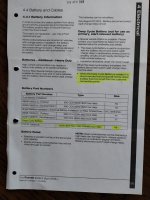
The alternator is NOT SMART TYPE is 150A capable.

I would continue to use Yuasa EFB type batteries for the 2 Ford batteries. I understand that the second Ford battery would be sort of in excess there is no more space to change it for a Lithium and I'm thinking that I'm 99.99% sure of the engine starting. I'm hoping that the link between the batteries via the b to b is isolated when the engine isn't running and that the batteries being different technologies either side of the b to b is not a problem. Sorry my questions/assumptions will seem dumb to you experts but if I simply don't know or understand my only way forward is to ask.
 
I'm not clear what you are retaining the second 'Ford' battery for.
If it doesn't start the engine and won't power the habitation, what will it do?
 
I'm not clear what you are retaining the second 'Ford' battery for.
If it doesn't start the engine and won't power the habitation, what will it do?
Perhaps this:

"The second battery as originally fitted by Ford is well tied up with the whole of the vans electrics and is used for power hungry things like heated windscreens front and rear when the engine is running."

 
Yes a good question 'what good is this Ford installed second battery ?'
I think it is an outdated option available from Ford when our Transit was built in 2007. (Before Lithium came along.) Said to provide an extra source of rechargeable battery power that, if flattened completely, would not prevent the engine from starting.

Autosleepers seized on this and used it as a leisure battery and just connected their leisure control panel and the Eberspacher heater to it. I found it insufficient for my use and doubled it's size. I think it's just 90AH at 20 hour rate. Even with that it's always been a struggle with my type of camping, which is always off grid for up to two weeks. If the sun doesn't shine it's very difficult as I always try to stop using power when the voltage is below 12.2 to preserve the battery life. The two Ford installed batteries completely fill the drivers seat base and the third battery (I added) and the solar controller goes under the passenger seat. There is not a lot of other space for batteries and electric hardware plus any extra running of cables nearby would be a right 'Faff on'. A while ago I tried disconnecting the second Ford battery and the engine still started fine but some things stopped working like the screens heaters for example.

I thought about replacing this second Ford battery with a Lithium but decided it would be a mistake and not likely get charged properly and may screw up something else with the canbus surveying everything all the time. The van has been 100% reliable for over 19 years so I don't want to interfere with what works well. I can't afford a new van for sure and wouldn't particularly want one either. Who wants a modern engine with a cambelt running in oil ? not me ! I think this 2.4 140hp engine with a cam chain and no DPF is one of the last very good reliable engines. It does about 30mpg, a bit short but does me OK for the distances I travel (west country)

So I thought the best way I can get all the 'benefits' of Lithium ie longevity, useable capacity, etc etc would be to leave the original Ford as factory and replace the third EFB battery, that I fitted in parallel and use that space for a 150AH Lithium which hopefully will last me as long as I'll be driving and give me more reliable and useable power, along with a Victron b to b.

I'm hoping that's a reasonable summary, the only thing I don't know is, if my proposed plan to install and connect the Lithium and a Victron b to B will work OK and won't screw anything else up. I've never had or installed a b to b before.

Thanks very much to Geek and Nabsim not forgetting Rugby Ken for all your advice. I'm sure it's hard to help someone with so little knowledge when you have so much, and especially when the question is either unclear or complicated. I'm wondering how I'll get on with a seller when I come to buy the hardware when/if I can continue with this project on my own 😁🤔.

I'll bet there will be some frowns and long looks !

IMG_20260113_125327704.jpg
 
Back
Top