motoroamer
Full Member
- Messages
- 36
Can I get some advice or ideas please.
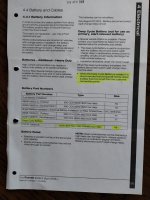
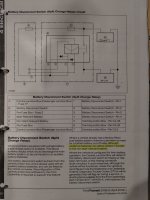
I have a Campervan converted by Autosleepers in 2007. It is a Ford Transit Mk7 2.4 which Ford supplied with 2 batteries already installed. As such both batteries are used together for starting and connected in series when the engine is started/running. When the ignition is off a bi-stable relay disconnects the two batteries from each other. I'll refer to this second battery as Auxiliary. It was said this design was to ensure the engine would always start regardless of the discharged state of the auxiliary battery. Good for use by folk using the vehicle for hydraulic equipment repairs, tyre fitters etc on the road.
Autosleepers used this second Auxiliary battery as a leisure battery rather than installing another.
I wanted more leisure power availability than this 100 AH so installed another battery and parallel connected this one to the other effectively creating 2 times Auxiliary batteries for Leisure type of use, 200AH in all. I also fitted 120W of solar to charge these two batteries as I tend not to drive regularly when camping. I used a Morningstar Sunsaver MPPT Controller. It all seemed to work ok for a while, though the amount of useable power (percentage) from EFB batteries was always restrictive. The Auxiliary batteries now need to be replaced are as they don't hold a charge anymore.
Now I'm wondering whether to 'push the boat out' and separate the systems and have the Ford set as it was originally by Ford and have a completely separate set up for the Leisure side using a Lithium battery of about 150AH which would fit under the passenger seat and use a Victron B to B charger between something like a Eco tree Lithium 150AH and the Yuasa EFB starter battery. Also get a new Victron Solar Controller for the Lithium battery.
Would this work and would it be advantageous for me ?
I don't have any idea which lithium battery to get neither B to B or Solar Controller but would guess at......
Eco tree lithium life po4 150 AH with heater and Bluetooth.
Victron Orion XS 50A B to B charger
Victron smart solar charge controller mppt 100/50 (I may add panel/s)
Would these all work well together and be appropriate ?
Any ideas, comments or suggestions very much appreciated.
I have a Campervan converted by Autosleepers in 2007. It is a Ford Transit Mk7 2.4 which Ford supplied with 2 batteries already installed. As such both batteries are used together for starting and connected in series when the engine is started/running. When the ignition is off a bi-stable relay disconnects the two batteries from each other. I'll refer to this second battery as Auxiliary. It was said this design was to ensure the engine would always start regardless of the discharged state of the auxiliary battery. Good for use by folk using the vehicle for hydraulic equipment repairs, tyre fitters etc on the road.
Autosleepers used this second Auxiliary battery as a leisure battery rather than installing another.
I wanted more leisure power availability than this 100 AH so installed another battery and parallel connected this one to the other effectively creating 2 times Auxiliary batteries for Leisure type of use, 200AH in all. I also fitted 120W of solar to charge these two batteries as I tend not to drive regularly when camping. I used a Morningstar Sunsaver MPPT Controller. It all seemed to work ok for a while, though the amount of useable power (percentage) from EFB batteries was always restrictive. The Auxiliary batteries now need to be replaced are as they don't hold a charge anymore.
Now I'm wondering whether to 'push the boat out' and separate the systems and have the Ford set as it was originally by Ford and have a completely separate set up for the Leisure side using a Lithium battery of about 150AH which would fit under the passenger seat and use a Victron B to B charger between something like a Eco tree Lithium 150AH and the Yuasa EFB starter battery. Also get a new Victron Solar Controller for the Lithium battery.
Would this work and would it be advantageous for me ?
I don't have any idea which lithium battery to get neither B to B or Solar Controller but would guess at......
Eco tree lithium life po4 150 AH with heater and Bluetooth.
Victron Orion XS 50A B to B charger
Victron smart solar charge controller mppt 100/50 (I may add panel/s)
Would these all work well together and be appropriate ?
Any ideas, comments or suggestions very much appreciated.





 .
.