
You are using an out of date browser. It may not display this or other websites correctly.
You should upgrade or use an alternative browser.
You should upgrade or use an alternative browser.
B2B
- Thread starter nabsim
- Start date

wildebus
Full Member
- Messages
- 7,858
Solar is great for summer. And ideal for maintenance charging as it tends to be fairly low current on average (across a day) and when topping off a battery, low current is what is being used.
This time of year, Solar is by no means a primary charging method.
I don't know what kind of Alternator charging your Motorhome has (I don't mean what brand, but what method/technology). If it is just a basic voltage transfer from the alternator then it will be be fine at the lower bulk charging side but rubbish at the final 20% or so absorbtion part - and remember, that 20% is not 1/5 th of how you have used the battery but 2/5ths - as you generally want to stop drawing when you go down to 50%.
so 50% - 80% of Battery Charging is Bulk, 80% -100% is Absorbtion - so a significant amount and in reality most of what you need to replenish is in this 80% - 100% area.
I was running a VSR in my Camper and that was great if I really knocked down the batteries as it gave a big charge into the batteries; and the 400W Solar array with MPPT controller would take care of the "fine charging" and get my batteries to 100% every morning.
This time of year, combined with where I park means the Solar is no longer keeping up with the regular drain. So I have fitted a B2B which will be able to manage the Absorbtion phase as well as the Bulk phase (the initial Bulk park is not quite as fast as the 100A VSR but the rest is far superior)
This time of year, Solar is by no means a primary charging method.
I don't know what kind of Alternator charging your Motorhome has (I don't mean what brand, but what method/technology). If it is just a basic voltage transfer from the alternator then it will be be fine at the lower bulk charging side but rubbish at the final 20% or so absorbtion part - and remember, that 20% is not 1/5 th of how you have used the battery but 2/5ths - as you generally want to stop drawing when you go down to 50%.
so 50% - 80% of Battery Charging is Bulk, 80% -100% is Absorbtion - so a significant amount and in reality most of what you need to replenish is in this 80% - 100% area.
I was running a VSR in my Camper and that was great if I really knocked down the batteries as it gave a big charge into the batteries; and the 400W Solar array with MPPT controller would take care of the "fine charging" and get my batteries to 100% every morning.
This time of year, combined with where I park means the Solar is no longer keeping up with the regular drain. So I have fitted a B2B which will be able to manage the Absorbtion phase as well as the Bulk phase (the initial Bulk park is not quite as fast as the 100A VSR but the rest is far superior)
wildebus
Full Member
- Messages
- 7,858
there are different models. the LV is the usual one for the latest smart alternators. the standard version is the one for 'normal' alternators.
I fitted the BCDC1240 to my 2003 LT.
there is a Dual Input model that has seperate connections for Solar and Starter Battery inputs. The Single Input model supports Solar as well still with a built-in MPPT controller, but you use a 5-pin relay setup to switch the actual input between the two. (I didn't bother with the Solar input as have my Victron Controller for that).
Difference between Dual and Single input .... Dual will use Solar input and 'top up' to 40A with Alternator power when engine running; Single is either/or - so engine running, solar will do nothing, and engine off, solar will be doing the charging. Personally I see little value in having both running simultaneously as the total is limited to 40A, a current the Alternator can easily achieve on its own,. But the Dual input maybe a little easier to install generally if using both (If I wanted Solar and Alternator, which version - Single or Dual Input - I would choose would be down to price)
I fitted the BCDC1240 to my 2003 LT.
there is a Dual Input model that has seperate connections for Solar and Starter Battery inputs. The Single Input model supports Solar as well still with a built-in MPPT controller, but you use a 5-pin relay setup to switch the actual input between the two. (I didn't bother with the Solar input as have my Victron Controller for that).
Difference between Dual and Single input .... Dual will use Solar input and 'top up' to 40A with Alternator power when engine running; Single is either/or - so engine running, solar will do nothing, and engine off, solar will be doing the charging. Personally I see little value in having both running simultaneously as the total is limited to 40A, a current the Alternator can easily achieve on its own,. But the Dual input maybe a little easier to install generally if using both (If I wanted Solar and Alternator, which version - Single or Dual Input - I would choose would be down to price)
Deska
Guest
Worth checking out some uTube video's, specifically from Sterling Power - they provide some great and simple to understand utube videos on Battery to Battery Chargers. I have a 60 Amp BtoB fitted to my van (Lithium 12volt batteries) and it works really well. When wild camping off grid I only have to run the engine for half an hour or so and I get plenty of charge back into the batteries.I know Del has posted asking about makes but my question is a bit different so thought it best to start a new thread.
I think I know what a B2B is supposed to do but not certain I know all the pros and cons so can you explain please? Also is the fitting explained on the instructions the ‘best’ way to fit?
Also my Sprinter could have a 90ah, 120ah or 200ah alternator, that is if it is original. What should I expect from each of those?

Trotter
Full Member
- Messages
- 4,067
I'll probably fit a B2B before the Spanish trip if only as belt and braces. I'm going to try to avoid sites using Aires and such to dump black and do laundry. On advice from others looks like Ctek 250 without the Smartpass. Will consult with my betters if not elders.
Okta
Full Member
- Messages
- 890
I have similar experiences with Lithium, B2B does the job in less than 1 hour. The difference is that Lithium will accept the full charging rate until full, no tailing off as voltage rises. Unfortunately not a cheap solution.Worth checking out some uTube video's, specifically from Sterling Power - they provide some great and simple to understand utube videos on Battery to Battery Chargers. I have a 60 Amp BtoB fitted to my van (Lithium 12volt batteries) and it works really well. When wild camping off grid I only have to run the engine for half an hour or so and I get plenty of charge back into the batteries.

Minisorella
Moderator
- Messages
- 1,624
It's ringing bells with me that you can upgrade the cabling from your alternator to enable it to push out far more than the usual amount when you're driving. Is this what you mean by a smart alternator or is that something that does the same sort of thing without changing the cables?
As ever, my usual disclaimer about knowing nothing, Jon Snow
As ever, my usual disclaimer about knowing nothing, Jon Snow
Okta
Full Member
- Messages
- 890
No a smart alternator is one that saves fuel and emissions by turning itself down when the engine battery is full. I believe it also turns down if extra power is needed e.g. to get up a steep hill and works hardest when you are slowing down. Or something like that, basically a big alternator could be using 4bhp (I read that somewhere) so it makes sense to reduce that load if it is not needed. The problem arises for motorhomes because although the engine battery is full when it drops off, the leisure battery may not be. A B2B overcomes this problem, as well as boosting and regulating the leisure battery’s charging.It's ringing bells with me that you can upgrade the cabling from your alternator to enable it to push out far more than the usual amount when you're driving. Is this what you mean by a smart alternator or is that something that does the same sort of thing without changing the cables?
As ever, my usual disclaimer about knowing nothing, Jon Snow
The cabling between your alternator and the engine battery should be fine. On some motorhomes the cabling to the leisure system is suspect. On my Hymer there is a good sized cable running to the leisure system from the engine one, protected with a 50A fuse. Some peple say that it is British manufacturers that use lower rated cables but I can’t say one way or another. Adding a B2B will not overcome undersized cables if that is the problem.

nabsim
Full Member
- Messages
- 4,208
Thought I would update this thread with what I ended up doing. I can seem a bit thick when trying to get my head round things until it clicks in to place but I do get there eventually 
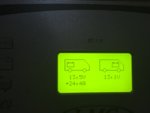
After much reading and looking at different ways of doing this I opted for the 30 amp Votronic as this seemed to be designed for a system like mine. I have a Schaudt EBL 100-2 in my van and the B2B utilises all existing cabling and I just had to add a single cable from the B2B to the leisure battery negative.
The unit is quite small and easily fitted in my electrical compartment, it does have a small fan but I cannot hear it at all in situ. I just had to beak in to the wiring at the EBL and the wiring diagram that came with it was clear enough. I did spend a while going over it but this paid off when it came to fitting as it was all completed in under an hour.
So far so good, I have been away in the van since 28th December and we are holding up okay, I estimate out average usage could be 100amps a day but recharge power blocks and tv when we are running. I now start the van engine when we start the Eberspacher and run until it ramps down so that helps as well.
I have seen 24amps going to the batteries but obviously I can see when driving so don’t know how high it goes. One thing I do know is I never saw 14.4v going to either battery on the control panel before except on hook up and I get that now no problem.
If you have an EBL fitted it is worth looking at this if you need more power in winter as not having to run big cables is definite bonus in time, scraped knuckles, high blood pressure and cost. All in it has cost me a few days reading and £135.
After much reading and looking at different ways of doing this I opted for the 30 amp Votronic as this seemed to be designed for a system like mine. I have a Schaudt EBL 100-2 in my van and the B2B utilises all existing cabling and I just had to add a single cable from the B2B to the leisure battery negative.
The unit is quite small and easily fitted in my electrical compartment, it does have a small fan but I cannot hear it at all in situ. I just had to beak in to the wiring at the EBL and the wiring diagram that came with it was clear enough. I did spend a while going over it but this paid off when it came to fitting as it was all completed in under an hour.
So far so good, I have been away in the van since 28th December and we are holding up okay, I estimate out average usage could be 100amps a day but recharge power blocks and tv when we are running. I now start the van engine when we start the Eberspacher and run until it ramps down so that helps as well.
I have seen 24amps going to the batteries but obviously I can see when driving so don’t know how high it goes. One thing I do know is I never saw 14.4v going to either battery on the control panel before except on hook up and I get that now no problem.
If you have an EBL fitted it is worth looking at this if you need more power in winter as not having to run big cables is definite bonus in time, scraped knuckles, high blood pressure and cost. All in it has cost me a few days reading and £135.
saxonborg
Full Member
- Messages
- 1,143
Read all the previous posts and followed them with interest, I sort of understand the charging regimes required to maintain starter and leisure battery condition but don’t know how to apply it to my own setup. I will have shortly 200 watt solar feeding through a Victron solar controller into two x 100ah batteries. Also connected to these batteries is the Electobloc EBL99. The solar will keep the leisure batteries charged sun permitting but what do I need to add to ensure that when the engine is running the starter battery can be charged to it’s capacity, as I understand from Wildebus’s posts the alternator output will not do this, so I presume the leisure batteries will also not be charged fully for the same reason.
Despite the fact that the alternator on my 2008 Ford Transit may not be fully charging the batteries I am sure that the starter battery was the original battery when I had the drivers seat off last year.
Apologies if my explanation seems a bit disjointed but still trying to get my head round motorhome electrics.
Would appreciate advice on how to get the best out of my system as it will all be new as I will have added solar panels and controller, replaced my leisure batteries and will be replacing my starter battery shortly, only the EBL unit will be original.
Despite the fact that the alternator on my 2008 Ford Transit may not be fully charging the batteries I am sure that the starter battery was the original battery when I had the drivers seat off last year.
Apologies if my explanation seems a bit disjointed but still trying to get my head round motorhome electrics.
Would appreciate advice on how to get the best out of my system as it will all be new as I will have added solar panels and controller, replaced my leisure batteries and will be replacing my starter battery shortly, only the EBL unit will be original.
nabsim
Full Member
- Messages
- 4,208
Not sure if your Victron controller has an output to trickle charge starter battery like the Votronic I used does Eric. If not it may have a load output that you could connect but wait for someone with a Victron to reply. Your solar will be separate to the EBL itself so you wont see what is being harvested on Schaudt control panel. I got round that by fitting a display that shows me what solar is doing, you may be able to see yours on your phone depending which a Victron you have.
All I did was run cable from solar controller to positive lead for starter battery on a EBL, but my controller has an output for starter battery charging.
All I did was run cable from solar controller to positive lead for starter battery on a EBL, but my controller has an output for starter battery charging.
saxonborg
Full Member
- Messages
- 1,143
I have the smart solar Victron controller but I also bought a Nasa BM1 to monitor the batteries, so I will be able to check on solar harvesting and consumption.Not sure if your Victron controller has an output to trickle charge starter battery like the Votronic I used does Eric. If not it may have a load output that you could connect but wait for someone with a Victron to reply. Your solar will be separate to the EBL itself so you wont see what is being harvested on Schaudt control panel. I got round that by fitting a display that shows me what solar is doing, you may be able to see yours on your phone depending which a Victron you have.
All I did was run cable from solar controller to positive lead for starter battery on a EBL, but my controller has an output for starter battery charging.
wildebus
Full Member
- Messages
- 7,858
Just to answer the Solar Question:Read all the previous posts and followed them with interest, I sort of understand the charging regimes required to maintain starter and leisure battery condition but don’t know how to apply it to my own setup. I will have shortly 200 watt solar feeding through a Victron solar controller into two x 100ah batteries. Also connected to these batteries is the Electobloc EBL99. The solar will keep the leisure batteries charged sun permitting but what do I need to add to ensure that when the engine is running the starter battery can be charged to it’s capacity, as I understand from Wildebus’s posts the alternator output will not do this, so I presume the leisure batteries will also not be charged fully for the same reason.
Despite the fact that the alternator on my 2008 Ford Transit may not be fully charging the batteries I am sure that the starter battery was the original battery when I had the drivers seat off last year.
Apologies if my explanation seems a bit disjointed but still trying to get my head round motorhome electrics.
Would appreciate advice on how to get the best out of my system as it will all be new as I will have added solar panels and controller, replaced my leisure batteries and will be replacing my starter battery shortly, only the EBL unit will be original.
The Majority of the Victron MOT Solar Controllers have one pair of inputs - for the Panels to feed into; and one pair of outputs - to connect to the Leisure Battery.
As far as 'engine' charging goes, the problem with just relying on the alternator to do the charging is that it will rarely be at a voltage level that will allow for full battery charging - either Starter OR Leisure. It is good practice (although rarely done) to periodically connect the starter battery to a good mains charger to give it a proper full charge. Does it matter? usually won't be noticable, but doing that will maintain the battery better.
A B2B Charger takes care of 'proper' Lesiure Battery charging via alternator as they will boost the voltage upto 14.4V or whatever. This is the best option for Split-Charging where funds allow (reckon on around £200 more for a B2B over a basic relay).
If you have a good Solar Controller with a multi-stage charging profile (which the Victron does, of course), then that controller can carry on where the alternator left off the charging and finish the job off, as it were, so your Leisure Batteries will be treated well probably, even if you have a basic Relay rather than a B2B.
If you do have a relay system that is voltage switched rather than engine/ignition switched and is bi-directional sensing, then you will find that the Solar Controller will also start charging the Starter Battery once the Leisure Batteries are at a reasonable charge level - when this happens, your intelligent Victron Solar Controller will give your Starter battery a decent full charge as well. This is a handy bonus of the basic VSR system.
I don't know much about the EBL99 so don't know what that can or can't do in this respect.
Something that could be worth considering as you said you are replacing the Starter Battery ... maybe replace with the same battery technology as the Leisure Batteries if appropriate so the charging profile of the Victron MPPT Controller matches both battery sets for optimum charging. When I replaced my Starter Battery last year I actually used exactly the same model as I had in my Leisure Battery Bank for this reason so when the VSR came on, all batteries got charge profile they needed.
If you don't have a setup where the Solar will charge the Starter Batterty, then a trickle charge device such as a Battery Master can be fitted.
nabsim
Full Member
- Messages
- 4,208
One thing Eric, your EBL in itself does not charge your starter battery, it only takes power from it.
Don’t get confused like I did when I first got my solar, I thought connecting it to the EBL would charge starter as well, it does not, all that does is let the EBL know about all sources of power and will display it on the Schaudt display if you have the right type, I didn’t.
I now run my solar completely separately to everything else without any problem. My B2B is wired in to the cables going to my EBL so my Schaudt display can show what that is doing.
Don’t forget I probably have much greater power demands than you do with the compressor fridge and the diesel heating, (plus 2x all the gadgets to charge). See if you actually need to do anything before worrying about it, we were dead in the water after a couple of days with no solar.
Don’t get confused like I did when I first got my solar, I thought connecting it to the EBL would charge starter as well, it does not, all that does is let the EBL know about all sources of power and will display it on the Schaudt display if you have the right type, I didn’t.
I now run my solar completely separately to everything else without any problem. My B2B is wired in to the cables going to my EBL so my Schaudt display can show what that is doing.
Don’t forget I probably have much greater power demands than you do with the compressor fridge and the diesel heating, (plus 2x all the gadgets to charge). See if you actually need to do anything before worrying about it, we were dead in the water after a couple of days with no solar.
nabsim
Full Member
- Messages
- 4,208
Dave, does the Victron have a load terminal that may be used to charge starter battery or is it not suitable/not present? I have seen people mention this when I was looking at how to do mine but don’t know if it worked for them.
Of course in winter I will rarely get any charge going to my starter battery even though it is set to do this as there is very little sun most days so not 1amp spare to send lol
Of course in winter I will rarely get any charge going to my starter battery even though it is set to do this as there is very little sun most days so not 1amp spare to send lol
Okta
Full Member
- Messages
- 890
I have a Votronic VCC12-45 BtoB which I am very pleased with. It has special settings to make it EBL compatible and EBL wiring instructions. It also has an auxillary charging function which will charge the starter battery if mains or solar charging is available but gives priority to the leisure battery. Seemed purpose made for my needs and has proved itself.
Instructions here https://www.votronic.de/plugins/con...b 07-2018_e.pdf&base=https://www.votronic.de/
Instructions here https://www.votronic.de/plugins/con...b 07-2018_e.pdf&base=https://www.votronic.de/
saxonborg
Full Member
- Messages
- 1,143
Where did you get your Votronic B to B for £135?Thought I would update this thread with what I ended up doing. I can seem a bit thick when trying to get my head round things until it clicks in to place but I do get there eventually
After much reading and looking at different ways of doing this I opted for the 30 amp Votronic as this seemed to be designed for a system like mine. I have a Schaudt EBL 100-2 in my van and the B2B utilises all existing cabling and I just had to add a single cable from the B2B to the leisure battery negative.
The unit is quite small and easily fitted in my electrical compartment, it does have a small fan but I cannot hear it at all in situ. I just had to beak in to the wiring at the EBL and the wiring diagram that came with it was clear enough. I did spend a while going over it but this paid off when it came to fitting as it was all completed in under an hour.
So far so good, I have been away in the van since 28th December and we are holding up okay, I estimate out average usage could be 100amps a day but recharge power blocks and tv when we are running. I now start the van engine when we start the Eberspacher and run until it ramps down so that helps as well.
I have seen 24amps going to the batteries but obviously I can see when driving so don’t know how high it goes. One thing I do know is I never saw 14.4v going to either battery on the control panel before except on hook up and I get that now no problem.
If you have an EBL fitted it is worth looking at this if you need more power in winter as not having to run big cables is definite bonus in time, scraped knuckles, high blood pressure and cost. All in it has cost me a few days reading and £135.
View attachment 41408