
You are using an out of date browser. It may not display this or other websites correctly.
You should upgrade or use an alternative browser.
You should upgrade or use an alternative browser.
Aerotoxic radio programme.
- Thread starter 2cv
- Start date

HurricaneSmith
Full Member
- Messages
- 3,530
That's a great piece of reporting, Bill, and really clear. So many sad stories and yet nothing seems to change. 

Geek
Full Member
- Messages
- 1,096
Reading that has confirmed my previous decision on how to avoid this problem: I don't travel on aircraft. If everyone else did the same, we'd all be living in a better world.

2cv
Moderator
- Messages
- 7,505
A few interesting examples from 2007.
.
And a 2008 Panorama
.
And a 2008 Panorama
2cv
Moderator
- Messages
- 7,505
A sad story that I saw today;
A routine US Airways flight from Charlotte to St. Thomas in January 2010 turned into a nightmare when a toxic fume leak filled the cabin with tricresyl phosphate (TSP) — a dangerous chemical from the engines.

Seven crew members, including Captain Dave Hill and First Officer Macon “Mick” Fowler, suffered dizziness, headaches, and a strange “stinky feet” smell. Passengers had no idea, but the crew quietly fought through the flight. Fowler later said that if it had lasted 15 minutes longer, they might not have been able to land.
Doctors confirmed chemical exposure, and US Airways admitted the leak.
The aftermath was tragic: Hill lost his medical license and took his life years later; Fowler never flew again. Flight attendants Sylvia Baird and Denise Weiss still suffer lasting damage.
Now, survivors are pushing for mandatory cabin air sensors to prevent this from happening again.
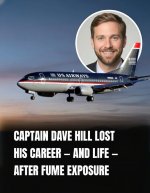
A routine US Airways flight from Charlotte to St. Thomas in January 2010 turned into a nightmare when a toxic fume leak filled the cabin with tricresyl phosphate (TSP) — a dangerous chemical from the engines.
Seven crew members, including Captain Dave Hill and First Officer Macon “Mick” Fowler, suffered dizziness, headaches, and a strange “stinky feet” smell. Passengers had no idea, but the crew quietly fought through the flight. Fowler later said that if it had lasted 15 minutes longer, they might not have been able to land.
Doctors confirmed chemical exposure, and US Airways admitted the leak.
The aftermath was tragic: Hill lost his medical license and took his life years later; Fowler never flew again. Flight attendants Sylvia Baird and Denise Weiss still suffer lasting damage.
Now, survivors are pushing for mandatory cabin air sensors to prevent this from happening again.
HurricaneSmith
Full Member
- Messages
- 3,530
Of others wish to read the recent sad article that Bill might be referring to, simply copy and paste the words below directly into Google.
us-airways-flight-fume-exposure
us-airways-flight-fume-exposure
2cv
Moderator
- Messages
- 7,505
2cv
Moderator
- Messages
- 7,505
Another life ruined, from The Wall Street Journal;
“Do you smell that?” Florence Chesson was asked by a fellow JetBlue flight attendant as they prepared for landing in Puerto Rico.
Chesson, as trained, inhaled a lungful of air through her nostrils in a single deep breath. “It smells like dirty feet,” she told her colleague.
Instantly, she started to feel like she had been drugged, Chesson said in an interview.
About an hour later, the aircraft had landed, loaded a fresh group of passengers and was back in the sky returning to Boston. As Chesson wrapped up the drinks service, a colleague rushed past to the back of the plane, her hands around her throat, complaining she was struggling to breathe before starting to vomit. Another was given emergency oxygen.
When the flight landed, the two cabin crew were taken to a hospital in an ambulance, one on a stretcher.
Chesson, her uniform and hair soaked in sweat and with an overpowering metallic taste in her mouth, went to meet her supervisors. “I felt like I was talking gibberish,” she recalled.
After months of worsening symptoms, Chesson was diagnosed with a traumatic brain injury and permanent damage to her peripheral nervous system caused by the fumes she inhaled.
Her doctor, a neurologist and consultant to the Pittsburgh Steelers, said in an interview that the effects on her brain were akin to a chemical concussion and “extraordinarily similar” to those of a NFL linebacker after a brutal hit. “It’s impossible not to draw that conclusion,” he said.
The doctor said he has treated about a dozen pilots and over 100 flight attendants for brain injuries after exposure to fumes on aircraft over the last 20 years. Another was a passenger, a frequent flier with Delta’s top-tier rewards status who was injured in 2023.
Chesson’s experience is one dramatic instance among thousands of so-called fume events reported to the Federal Aviation Administration since 2010, in which toxic fumes from a jet’s engines leak unfiltered into the cockpit or cabin.
The leaks occur due to a design element in which air you breathe on an aircraft is pulled through the engine. The system, known as “bleed air,” has been featured in almost every modern commercial jetliner except Boeing’s 787.
Incidents are accelerating in recent years, a Wall Street Journal investigation has found, driven in large part by leaks on Airbus’s bestselling A320 family of jets—the aircraft Chesson was flying.
Read more: https://on.wsj.com/46o50WA
“Do you smell that?” Florence Chesson was asked by a fellow JetBlue flight attendant as they prepared for landing in Puerto Rico.
Chesson, as trained, inhaled a lungful of air through her nostrils in a single deep breath. “It smells like dirty feet,” she told her colleague.
Instantly, she started to feel like she had been drugged, Chesson said in an interview.
About an hour later, the aircraft had landed, loaded a fresh group of passengers and was back in the sky returning to Boston. As Chesson wrapped up the drinks service, a colleague rushed past to the back of the plane, her hands around her throat, complaining she was struggling to breathe before starting to vomit. Another was given emergency oxygen.
When the flight landed, the two cabin crew were taken to a hospital in an ambulance, one on a stretcher.
Chesson, her uniform and hair soaked in sweat and with an overpowering metallic taste in her mouth, went to meet her supervisors. “I felt like I was talking gibberish,” she recalled.
After months of worsening symptoms, Chesson was diagnosed with a traumatic brain injury and permanent damage to her peripheral nervous system caused by the fumes she inhaled.
Her doctor, a neurologist and consultant to the Pittsburgh Steelers, said in an interview that the effects on her brain were akin to a chemical concussion and “extraordinarily similar” to those of a NFL linebacker after a brutal hit. “It’s impossible not to draw that conclusion,” he said.
The doctor said he has treated about a dozen pilots and over 100 flight attendants for brain injuries after exposure to fumes on aircraft over the last 20 years. Another was a passenger, a frequent flier with Delta’s top-tier rewards status who was injured in 2023.
Chesson’s experience is one dramatic instance among thousands of so-called fume events reported to the Federal Aviation Administration since 2010, in which toxic fumes from a jet’s engines leak unfiltered into the cockpit or cabin.
The leaks occur due to a design element in which air you breathe on an aircraft is pulled through the engine. The system, known as “bleed air,” has been featured in almost every modern commercial jetliner except Boeing’s 787.
Incidents are accelerating in recent years, a Wall Street Journal investigation has found, driven in large part by leaks on Airbus’s bestselling A320 family of jets—the aircraft Chesson was flying.
Read more:
https://on.wsj.com/46o50WA
HurricaneSmith
Full Member
- Messages
- 3,530
Terrible news about the collision between a landing Air Canada passenger jet and a fire engine at La Guardia Airport yesterday.
In addition to the tragedy, ITV News reported:
...... the vehicle was traveling across the runway to respond to a separate incident aboard a United Airlines flight, whose pilot had reported “an issue with odour".
In addition to the tragedy, ITV News reported:
...... the vehicle was traveling across the runway to respond to a separate incident aboard a United Airlines flight, whose pilot had reported “an issue with odour".
2cv
Moderator
- Messages
- 7,505
Rather long, but another sad story detailed in a respected medical journal.
 pmc.ncbi.nlm.nih.gov
Prolonged Disability following Re-Exposure after Complete Recovery from Aerotoxic Syndrome: A Case Report - PMC
Aerotoxic syndrome is a rarely recognized and poorly defined illness resulting from exposure to products of oil combustion in commercial aircraft bleed air systems. The pathophysiology of this syndrome is not well understood. A 42-year-old male ...
pmc.ncbi.nlm.nih.gov
2cv
Moderator
- Messages
- 7,505
Just another good article

 www.theage.com.au
Danger in the air: Fume events haunt flight crew
Flight attendants, pilots, even passengers have been affected by neurotoxins in the air supply of commercial jet aircraft. They’re calling for change.

TeamRienza
Full Member
- Messages
- 522
A very readable article, thank you. I have only flown a handful of times and only four long haul family visit flights, so, as stated in the article no real risk to me compared to day to day life.
The disturbing thing is big business trying to evade the topic and associated responsibility.
I think the article is right about it being a ticking time bomb like asbestosis, etc.
Davy
The disturbing thing is big business trying to evade the topic and associated responsibility.
I think the article is right about it being a ticking time bomb like asbestosis, etc.
Davy
HurricaneSmith
Full Member
- Messages
- 3,530
I've spent various chunks of my life flying around parts of the world in planes, from small stuff (company owned) to passenger jets (business and pleasure) and had no knowledge of the dangers of Aerotoxic Syndrome (Flume Events) until this thread.
The more I read, the more I agree with Bill that there has been an industrial desire to prevent the public from learning the truth.
People's lives have almost certainly been harmed, and that cannot be right.
The more I read, the more I agree with Bill that there has been an industrial desire to prevent the public from learning the truth.
People's lives have almost certainly been harmed, and that cannot be right.